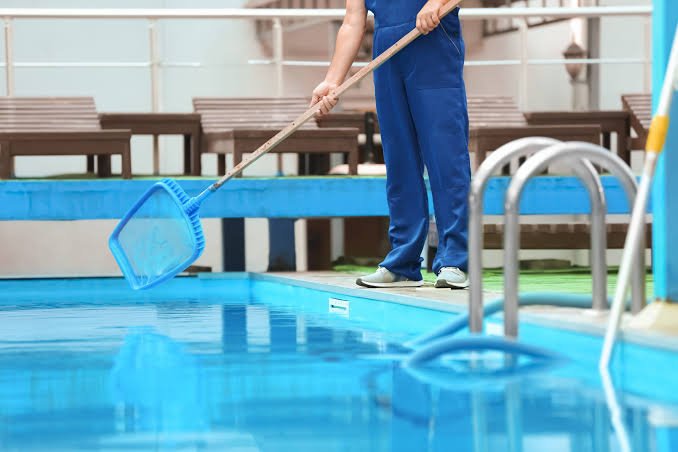
What Does a Professional Swimming Pool Service Include?
A professional swimming pool service includes much more than a quick skim of the surface. When searching for “swimming pool service near me,” choose a provider that offers comprehensive care. Your technician will brush the walls and steps, vacuum the floor, and empty the skimmer and pump baskets. They’ll also test your water chemistry and adjust chlorine, pH, alkalinity, and stabilizer levels to keep everything balanced and safe. Understanding each part of this process helps you recognize exactly what you’re paying for.
What a Pool Cleaning Service Actually Includes
When you hire a professional pool cleaning service, you’re getting more than someone skimming leaves off the surface.
A thorough service covers brushing walls and steps, vacuuming the pool floor, emptying skimmer and pump baskets, and testing your water chemistry. Technicians adjust chemical levels—chlorine, pH, alkalinity, and stabilizer—to keep your water safe and balanced.
They’ll also inspect your equipment, checking your pump, filter, and circulation system for early signs of trouble. Some services include backwashing your filter or cleaning cartridges.
In essence, you’re paying for a complete maintenance routine that protects your investment and keeps swimmers healthy.
What Goes Into Balancing Your Pool’s Chemicals?
Keeping your pool water balanced isn’t as simple as dumping in chlorine and calling it done. Professionals test and adjust multiple chemical levels during each visit.
They’ll measure your pH, alkalinity, calcium hardness, and sanitizer levels. If pH drifts too high or low, chlorine stops working effectively and your equipment corrodes faster.
Total alkalinity acts as a pH buffer, preventing wild swings. Calcium hardness protects your plaster and equipment from scaling or etching.
Getting all these levels working together requires precise adjustments, not guesswork, which is exactly why professional chemical balancing protects both your swimmers and your pool’s longevity.
What Equipment Does a Pool Technician Inspect?
Every pool visit includes a thorough equipment inspection that goes well beyond a quick glance. Your technician checks the pump for proper flow rates and unusual noises, inspects the filter for pressure issues and debris buildup, and examines the heater for corrosion or ignition problems.
They’ll also test your automatic chlorinator or salt cell for accurate output and inspect valves, o-rings, and seals for wear. If your pool has an automation system, they’ll verify it’s responding correctly.
Catching small equipment issues early prevents costly repairs and keeps your pool running efficiently throughout the season.
Signs You’re Getting a Thorough Pool Service
Not all pool services are created equal, and knowing what to look for helps you separate thorough technicians from those just going through the motions.
A quality technician arrives with proper testing equipment, not just a basic strip test. They check multiple chemical levels, inspect equipment without being asked, and document their findings.
You should receive a written report detailing what they tested, adjusted, or flagged for repair. They’ll also ask about recent changes, like heavy rain or increased swimmer use.
If your technician skips documentation and rushes the visit, that’s a sign you’re not getting full service value.
How Often Should You Schedule Pool Service?
Once you know what a thorough service looks like, the next step is knowing how often to schedule one.
For most pools, weekly service is the standard, especially during heavy swim seasons. Heat, sunlight, and frequent use rapidly throw off your water chemistry and accelerate debris buildup.
If you use your pool less often, bi-weekly service may work, but you’ll need to monitor conditions closely between visits.
Saltwater pools often require less frequent chemical adjustments but still need regular equipment checks. Your technician can recommend the right frequency based on your pool size, usage, and local climate.
Frequently Asked QuestionsHow Much Does a Professional Pool Cleaning Service Typically Cost?
You’ll typically pay $80–$150 monthly for basic professional pool cleaning services.
Costs vary based on your pool’s size, location, and service frequency.
One-time cleanings can run $150–$300, while full-service packages cost more.
Can a Pool Service Technician Repair Broken or Damaged Pool Equipment?
Yes, a pool service technician can repair your broken or damaged equipment.
They’ll fix pumps, filters, heaters, and lighting systems, saving you time and ensuring your pool runs efficiently and safely all season long.
Are Pool Service Chemicals Safe for Children and Pets?
When handled correctly, pool chemicals are safe for your kids and pets.
You’ll want to keep them away during treatment and wait the recommended time before letting them swim or play near the water again.
Do Pool Service Companies Offer Emergency or Same-Day Service Calls?
Many pool service companies, like Hydroscape Pools & Landscape Construction, offer emergency or same-day service calls, especially for urgent issues like equipment failures or chemical imbalances.
Confirm availability and any additional fees before you’re in a crisis situation.
What Certifications Should a Qualified Pool Service Technician Have?
Look for technicians who hold CPO (Certified Pool Operator) or AFO (Aquatic Facility Operator) credentials.
They should also have state licensing where required, plus chemical-handling certifications to ensure they’re qualified to service your pool safely.
Conclusion
Now that you know what professional swimming pool construction services cover, you can make a smarter decision for your backyard investment. You’re not just paying for someone to skim leaves — you’re getting chemical balancing, equipment inspections, and expert eyes catching problems before they become expensive repairs. Don’t wait until something goes wrong to call a pro. Schedule regular service, and you’ll keep your pool safe, clean, and swim-ready all season long.