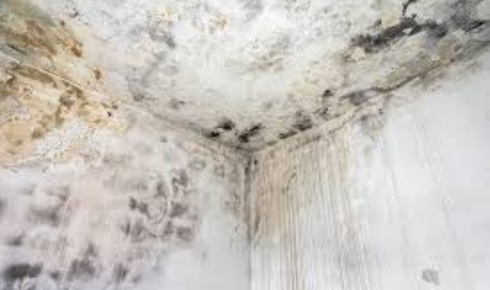
Mould or damp patches on upper walls and ceilings, especially on top floors, often point to water coming from above. If there’s no bathroom directly above that spot, the likely culprits are roof leaks or poor insulation. Water can enter through cracked tiles, damaged flashing, or gaps around chimneys and vents, then slowly travel down until it shows up as stains or mould inside.
You might notice brownish rings, peeling paint, or a musty smell that doesn’t go away even after cleaning. Sometimes the affected area feels cooler or slightly damp to the touch. Mould loves that constant moisture and low airflow.
Before just repainting, it’s important to find and fix the source. Otherwise, the patch will simply return. A roofer can check for damaged sections, blocked gutters that force water backwards, or poorly sealed joints. Once the roof issue is solved and the inside allowed to dry, treating and repainting the wall finally makes sense.
Indoor mould is annoying, but it’s also your home whispering, “Water is getting in where it shouldn’t.”