Water has a way of quietly affecting almost everything around us. At home, it touches the coffee we drink, the showers we take, the laundry we fold, and the appliances we expect to last for years. In businesses, it can influence customer experience, equipment performance, cleaning results, and sometimes even the quality of the service being delivered.
Most people only start thinking about water treatment when something becomes annoying. The tap water smells strange. Fixtures keep getting white buildup. Ice looks cloudy. A water heater starts struggling. But water quality is not just a small comfort issue. It can become a practical problem if it is ignored for too long.
Why Water Treatment Matters in Everyday Spaces
A good water system should fit the way a property actually uses water. A family home has different needs than a restaurant, office, salon, hotel, clinic, or manufacturing space. Still, the goal is similar: cleaner, better-performing water that supports the people and equipment relying on it.
For homeowners, residential water treatment can help improve water used for drinking, bathing, cooking, laundry, and cleaning. Depending on the water conditions, this might include filtration, softening, reverse osmosis, or a whole-home solution. The right setup can reduce unpleasant taste, odor, sediment, hardness minerals, and other concerns that make water feel less than ideal.
The Signs Your Property May Need Help
Water problems often show up in little ways before they become expensive. At home, hard water may leave spots on dishes, dull laundry, dry skin, and crusty mineral deposits around faucets. In a business, the signs can be even more costly. Scale can affect boilers, dishwashers, ice machines, coffee equipment, washing systems, and other water-using appliances.
Odor is another common concern. If water smells like sulfur, chlorine, metal, or musty pipes, people notice. In a home, it is unpleasant. In a business, it can affect customer trust. Nobody wants a restaurant glass of water that smells odd, or a hotel shower that leaves guests wondering if something is wrong.
Commercial Water Needs Are Often More Demanding
Businesses usually use water at a higher volume and with less room for error. A coffee shop may need consistent water for taste and machine protection. A hotel may need dependable soft water for guest comfort and laundry operations. A restaurant may need cleaner water for ice, beverages, dishwashing, and cooking. Even offices can benefit from better drinking water for employees and visitors.
That’s why commercial systems are designed differently from smaller household setups. They may need higher flow rates, larger capacity, specialized filtration, or custom configurations based on the property’s water usage. The equipment has to match demand, because an undersized system can create pressure issues, poor performance, or frequent maintenance headaches.
Testing Comes Before Choosing Equipment
Guessing is one of the biggest mistakes people make with water treatment. Two properties on the same street can still have different problems depending on plumbing age, water source, usage patterns, and internal fixtures. A water test helps identify what is actually present.
Hardness, iron, sulfur odor, chlorine, sediment, total dissolved solids, pH balance, and other factors may all influence the recommended solution. Once the water is tested, the conversation becomes much clearer. Instead of buying equipment based on assumptions, property owners can choose a system based on real conditions.
Installation Is Only Half the Story
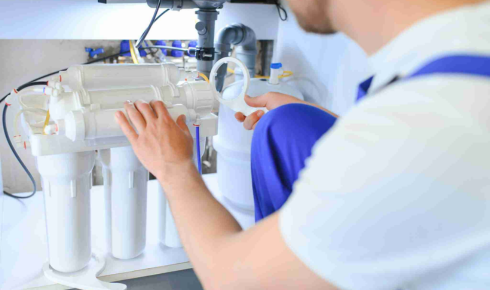
A water treatment system is not something you want installed carelessly. The system needs to be sized correctly, connected properly, and placed where it can be serviced without trouble. Poor installation can lead to leaks, low pressure, inefficient performance, or equipment that wears out sooner than expected.
Professional installation and maintenance make a big difference here. A trained technician can set up the system correctly, explain how it works, and create a service schedule that keeps it running as expected. Filters need changing, softeners may need salt, and larger commercial units may require regular inspections to avoid downtime.
Long-Term Value Comes from Consistency
Good water treatment is not about one dramatic change. It is about steady, reliable improvement. At home, that may mean better-tasting water, softer laundry, cleaner fixtures, and less scale buildup. In a business, it may mean fewer equipment issues, better product consistency, happier customers, and smoother daily operations.
The best system should quietly do its job in the background. You may not think about it every day, but you notice the benefits in small ways. Coffee tastes cleaner. Glassware looks better. Showers feel more comfortable. Machines run with less strain. Cleaning becomes less frustrating.
Better Water Supports Better Living and Working
Water is easy to take for granted because it is always there. But when the quality improves, people notice. A home feels more comfortable. A business feels more professional. Equipment has a better chance of lasting longer. Daily tasks become simpler.
Whether the need is small, large, residential, or commercial, the right water treatment starts with understanding the water first. From there, a properly selected and maintained system can make life easier in a surprisingly practical way. Better water may not be the flashiest upgrade, but it is one of those improvements that keeps giving back, day after day.